
Stop Guessing, Start Progressing: Why Tracking is the Secret to Weight Loss Success
When it comes to improving your health, tracking is one of the most powerful tools you can use. Whether it’s calories, weight, workouts, protein intake, or even how much water you’re drinking, tracking gives you objective data to work with. And let’s be clear: we’re after the facts, not your feelings about them. Your emotions might tell you that you “barely ate anything” yesterday, but the numbers might reveal a different story. Tracking helps bridge that gap between perception and reality.

Like Budgeting…
A great way to think about tracking is like budgeting your finances. If you’ve ever tried to save money, you know that “feeling” like you’re being frugal doesn’t necessarily mean you are. You might swear you hardly ever eat out, but then you look at your bank statement and—whoops—there’s a $200 line item for takeout. The same applies to food and exercise. If you’re not tracking, you’re just guessing. And if you’re guessing, how do you really know what needs to change?
One of the biggest (and most overlooked) benefits of tracking is that it opens your eyes to the potential for change. The moment you start logging your habits, you get real clarity on what’s happening. Maybe you realize you’re only getting 60 grams of protein a day when you thought you were hitting 100. Maybe your “active lifestyle” only includes two workouts per week instead of the four you assumed. Once you see the data, you see the opportunity—and that’s a game-changer.
A Tool, Not An Obsession
And here’s the thing: you don’t have to track forever. Just like you don’t need to meticulously track every penny for life, you don’t need to log your food and workouts forever. But just like occasional budgeting reviews can help you get back on track financially, a couple of weeks of tracking every now and then can serve as a reality check for your health habits. It’s a tool, not a prison sentence.
Another key reason tracking is so helpful? It removes the guesswork and the excuses. If progress stalls, you can look back at the data and pinpoint what’s going on. Are you really in a calorie deficit? Are you drinking enough water? Have your workouts been as consistent as you think? Instead of throwing your hands up in frustration, you can make informed adjustments to keep moving forward.

Many people resist tracking because they’re afraid of what they’ll see. But ignoring the numbers doesn’t change them—it only keeps you in the dark. Data is neutral. It doesn’t judge you, and it doesn’t care about your past mistakes. It simply tells you where you are so you can decide where to go next. And when you have clear information, you have power.
So if you’ve been struggling with your health goals, consider tracking for a couple of weeks. It’s not about being perfect; it’s about getting honest with yourself. Once you see the numbers, you’ll know exactly what needs to change—and more importantly, you’ll see that change is possible. And that, my friend, is where real progress begins.
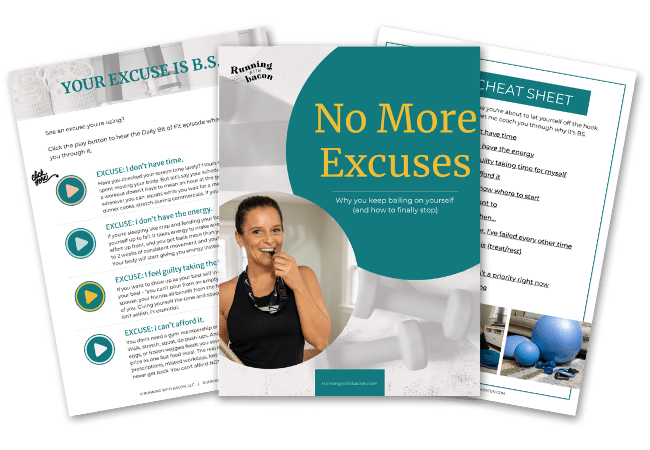
Stop Bailing on Yourself
You already know what to do. The problem is what happens after life gets messy.
Grab my free guide, No More Excuses, and I’ll coach you through the 12 most common reasons women bail on themselves and show you how to get past them in real life.
Stop letting your excuses decide your future. Learn how to keep going.
